
 EN
EN
The Speed Problem in Big Industrial Builds
Large industrial projects run on deadlines. A new warehouse, a logistics center, or a manufacturing plant represents serious money, and every week the roof is not on is a week the building is not generating revenue. Traditional roofing methods stack up materials and trades. You lay down the steel structure, then the purlins, then the insulation layer, then the waterproofing membrane, then the outer cladding. Each step needs different crews, different weather windows, and different inspections. That layered approach works, but it chews up time that most project managers simply do not have.
One Panel Does the Work of Several Layers
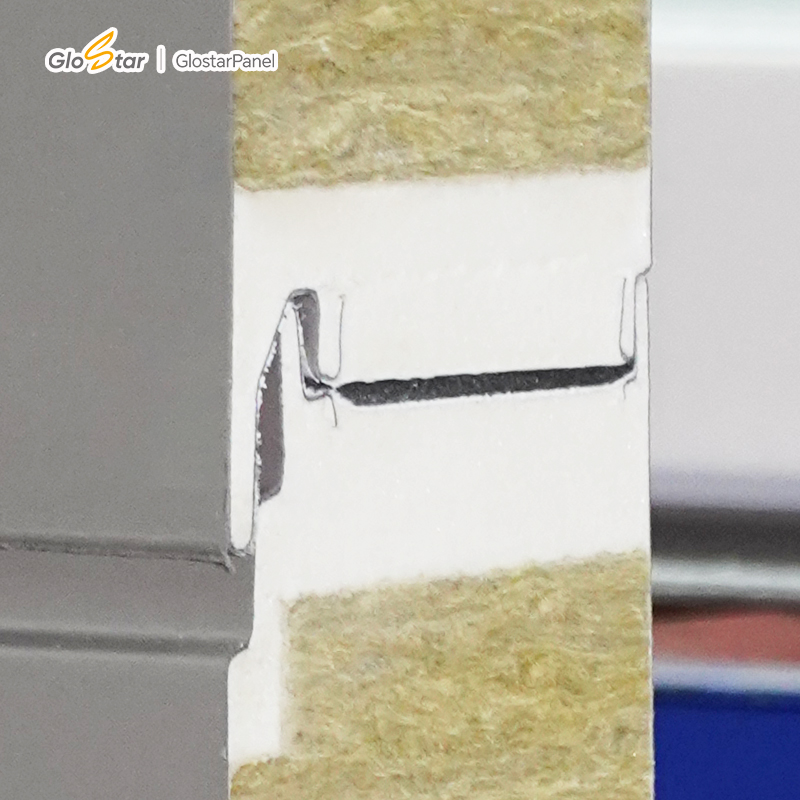
A sandwich panel roof collapses all those separate steps into a single product. The panel combines the outer weather skin, the insulation core, and the inner ceiling liner into one rigid, factory made unit. When the panels arrive on site, they are already cut to length and ready to lift into place. The crew hoists a panel onto the steel purlins, locks it into the adjacent panel using the tongue and groove joint, and secures it with fasteners. In one motion they have installed the structural deck, the thermal barrier, the vapor seal, and the finished ceiling. The insulation is not something you add later. It is already inside the panel, perfectly uniform and fully protected from moisture and compression from day one.
Tongue and Groove Locks Everything Together
The joint design is a big part of why sandwich panel roof installation moves so fast. Most industrial panels use a precise tongue and groove or cam lock system along the long edges. The panels slide together and interlock, creating a continuous seal that handles wind uplift and water penetration without needing separate flashing at every seam. Because the joint is factory formed into the panel edge, it is consistent from the first panel to the last. The crew on site does not have to fabricate complicated overlaps or wait for sealants to cure. They click the panels together, drive the fasteners, and move on to the next bay. On a large roof with thousands of square meters to cover, that simplicity translates directly into days or even weeks saved.
Fewer Trades, Simpler Logistics
A sandwich panel roof also simplifies site logistics. Instead of coordinating a structural steel crew, an insulation installer, a membrane applicator, and a cladding team, the general contractor deals with one trade for the entire roof envelope. The panels themselves ship as flat packs or carefully stacked bundles that unload quickly and stage neatly near the lifting equipment. Less material variety on site means less clutter, fewer crane picks, and less time spent tracking down missing components. When a project is spread over a massive footprint, keeping the supply chain and the labor as simple as possible has a direct impact on the schedule.
Built to Handle Big Spans Without Sagging
Industrial roofs often span wide column free spaces, and any roofing system has to hold its own weight plus snow, wind, and maintenance loads without excessive deflection. Sandwich panels designed for roofing applications have sufficient bending stiffness built into their composite structure. The metal face sheets bonded to the rigid insulation core work together like the flanges and web of a beam. This allows reasonable purlin spacing without the panel sagging or oil canning over time. The structural performance is engineered and tested at the factory, so the site team can install with confidence, knowing the panels will perform as expected without needing additional stiffening on site.
A Smarter Way to Close In a Building
For industrial projects where speed directly affects the bottom line, a sandwich panel roof is one of the most practical decisions a builder can make. It replaces a slow, multi step process with a single product that installs in a fraction of the time. The panels arrive ready to go, lock together with simple tools, and immediately deliver insulation, waterproofing, and structural performance. In an industry where time really is money, that kind of efficiency is hard to ignore.