
 EN
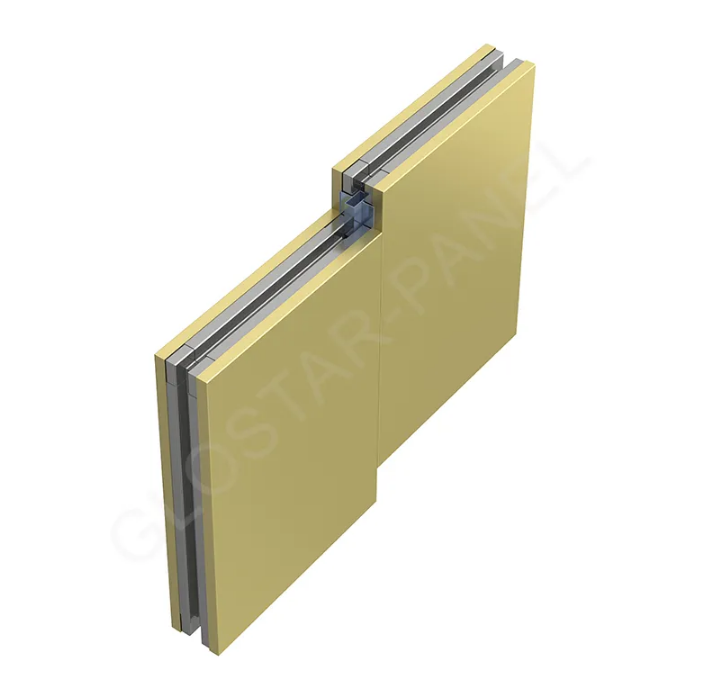
EPS has a reputation problem in some circles. Mention an expanded polystyrene core and half the room assumes a budget wall panel for a temporary office, not something that belongs in a building expected to carry load or last a couple of decades. That assumption misses what happens when the same EPS core is bonded to thin steel facings under controlled factory conditions. The facing does not just cover the foam. It changes how the panel behaves under bending, compression, and handling.
An EPS sandwich panel with laminated steel facings offers additional strength that bare foam simply cannot provide, and that strength is not a marketing exaggeration. It comes from composite action between two stiff, thin skins and a lightweight core working as a unit.
What the Steel Facing Actually Does Under Load
A sandwich panel is a composite structure. Two thin, stiff facings are separated by a thicker, lighter core, and the three layers are bonded so they deform together. Under bending, the steel facings carry tension and compression while the EPS core keeps them separated at a fixed distance. That separation is what gives the panel its bending stiffness. The core itself is not asked to resist bending directly; its job is to hold the facings apart and transfer shear between them.
This matters because EPS on its own has modest mechanical properties. A typical EPS core in a sandwich panel might show a compressive strength at 10 percent deformation around 100 kPa, depending on density and grade. That is enough to support distributed loads and normal handling, but it is not a structural material in the way steel or concrete is. Once thin steel facings are bonded to both sides, the panel can resist bending moments and axial compression through the facings, using the core as a spacer and shear connector rather than a primary load-bearing element.
The bond line is the make-or-break detail. If the adhesive fails or is applied inconsistently, the facings and core stop acting as a composite, and the panel reverts to two thin steel sheets sitting against a foam block. Delamination in metal-faced panels is usually traced back to surface contamination, adhesive applied outside its open time, or insufficient dwell before handling. A panel that passes a bending test in the factory can still delaminate in service if those process controls slip.
The Numbers Behind Steel-Faced EPS Panel Strength
The structural contribution of steel facings shows up clearly in published research on steel-faced EPS core sandwich panels. Work at the University of New South Wales examined critical wrinkling stresses for these panels and reported values in the range of roughly 30 MPa to 48 MPa for steel-faced EPS core configurations, depending on the calculation method and panel thickness. Wrinkling is a local buckling mode where the compressed facing buckles away from the core, and it often governs the strength of thin-faced sandwich panels.
The same body of work showed how critical wrinkling stress varies with panel thickness. For steel-faced EPS core panels with a 0.6 mm facing and SL-grade EPS core, reported critical wrinkling stresses ranged from around 36 MPa at 50 mm thickness down to roughly 29 MPa at 200 mm thickness, with symmetric and asymmetric wrinkling modes competing depending on the geometry. These are not abstract lab numbers. They tell a designer where the facing is likely to buckle first and whether a thicker core actually helps or just shifts the failure mode.
| Panel Configuration | Critical Wrinkling Stress (approx.) | Facing Thickness | Core Grade | Practical Implication |
|---|---|---|---|---|
| Steel-faced EPS, 50 mm | ~36 MPa (symmetric) | 0.6 mm | SL grade EPS | Thin panels can develop local wrinkling under high compressive stress |
| Steel-faced EPS, 100 mm | ~27 to 30 MPa | 0.6 mm | SL grade EPS | Thicker core changes the buckling mode; facing still governs in many cases |
| Steel-faced EPS, 200 mm | ~29 MPa | 0.6 mm | SL grade EPS | Core thickness alone does not solve local buckling; facing and bond quality remain critical |
The table points to a conclusion that experienced panel designers already work with: the steel facing is doing the heavy lifting in compression and bending, and the EPS core is contributing by keeping the facings in place and transferring shear. An EPS core with a higher density or a different grade can change the shear modulus and the wrinkling stress, but the fundamental load path runs through the steel.
How Steel Facings Change Handling and Serviceability
The difference between a bare EPS board and a steel-faced EPS panel is immediately obvious on a construction site. A bare EPS board dents under a thumb, chips at the edges, and has to be handled with care. A steel-faced panel arrives as a finished building element that can be lifted, stacked, and walked on during installation without crumbling at the corners. That handling strength is not a trivial convenience; it affects how quickly a crew can close a building envelope and how much damage gets repaired before the project is even finished.
Steel facings also contribute to impact resistance in service. In cold storage and industrial buildings, panels take hits from forklifts, pallet jacks, and cleaning equipment. A steel skin distributes that impact over a wider area and protects the EPS core from direct damage. The steel surface also provides a cleanable, hygienic face that suits food processing and cold chain environments, where smooth walls are easier to wash down and keep sanitary.
There is a serviceability side to the strength story as well. Steel-faced EPS panels are stiff enough to span between supports at practical spacings, which means fewer purlins or girts in the structural frame. That can reduce the overall steel tonnage of a building even though the panels themselves contain steel. The trade-off is that the panel is not infinitely strong. Point loads, concentrated impacts, and unsupported edges can still damage the core or initiate wrinkling, so the design still has to respect the panel's limits rather than treating the steel facing as an armor plate.
Where Steel-Faced EPS Panels Fit and Where They Do Not
These panels are a strong fit for wall and roof cladding in industrial buildings, cold storage facilities, modular structures, and commercial buildings where a combination of insulation and structural skin is needed. Research on Australian sandwich panel construction notes that panels made with expanded polystyrene cores and thin high-strength steel facings are widely used in building systems, including cold storage applications, because the composite action gives a stiff panel with good thermal properties.
They are not a universal replacement for every panel type. EPS has a higher thermal conductivity than polyurethane or polyisocyanurate, so a steel-faced EPS panel needs more thickness to hit the same insulation target in a deep-freeze application. EPS also absorbs water more readily than closed-cell polyurethane if moisture reaches the core, and a wet EPS core loses insulation value quickly. That makes edge sealing, vapor barriers, and installation detailing just as important as the facing thickness.
The honest limitation is that the steel facing improves strength and handling, not thermal performance. A steel-faced EPS panel in a cold room still depends on the EPS thickness and the integrity of the vapor barrier to keep heat out. If the panel gets wet or the joints are not sealed, the steel skin will not compensate for a saturated core.
A Field Observation from a Cold Storage Retrofit
During a retrofit of an older cold storage facility, the project team was evaluating whether to replace damaged wall panels or repair them in place. Several panels had been dented by forklift traffic near the loading dock, and the EPS cores behind the dents were crushed in localized areas. The steel facings had held the panel together, so there was no catastrophic failure, but the damaged zones were creating thermal bridges where condensation formed on the warm side.
The team removed the damaged sections and found that the surrounding panels were still structurally sound. The facings had distributed the impact well enough that the damage did not propagate along the panel length. The repair involved cutting out the crushed zones and inserting new insulated sections with sealed joints, rather than replacing entire wall runs. That outcome was possible because the steel facings had prevented the kind of progressive delamination that can turn a localized dent into a full panel failure.
The lesson from that retrofit was not that steel-faced EPS panels are indestructible. It was that the steel skin changes the failure mode from sudden delamination to localized, inspectable damage. That makes maintenance planning more predictable, provided the repair crew understands that a dented facing with a crushed core behind it still needs to be opened and re-insulated, not just patched on the surface.
Bringing the Panel Specification Together
For buyers and specifiers, the practical takeaway is that steel-faced EPS panels reward a systems approach. Facing thickness, steel yield strength, adhesive coverage, EPS density, and edge detail all interact. A heavier facing on a low-density core may not deliver the expected strength if the core cannot transfer shear effectively. A high-density core with a thin facing may still wrinkle under compression. The combination has to be specified as a unit.
Shandong Glostar Panel Building Systems produces metal-faced sandwich panels with a focus on consistent bonding and repeatable panel geometry. For projects that depend on the steel facing and the EPS core working together, that consistency across production runs is what keeps the installed envelope performing the way the design intended.