
 EN
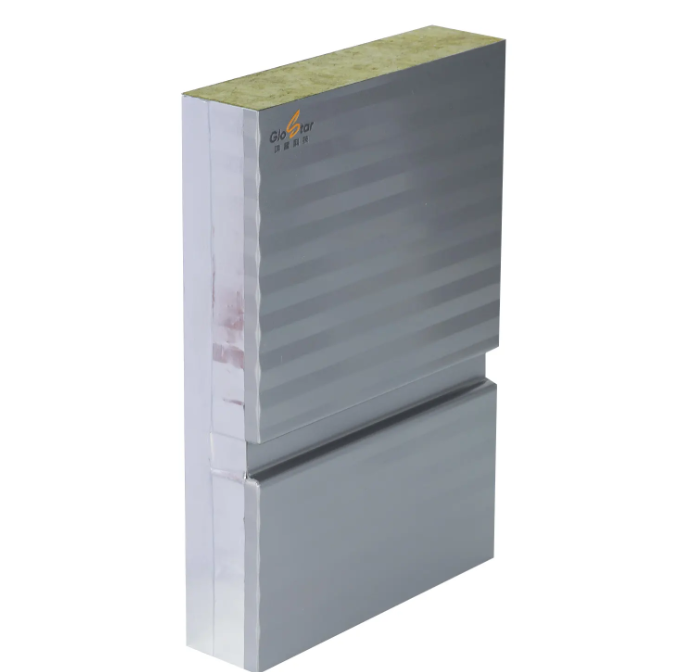
Walk through any reefer build shop and the conversation eventually lands on the core. Not the refrigeration unit, not the door seals, but the foam inside the panel. For decades, the industry has gravitated toward rigid polyurethane as the insulation backbone of refrigerated truck bodies, and that preference is not brand loyalty or habit. It comes down to how the material behaves when the truck is loaded, unloaded, washed down, and parked in a yard with no shade.
The Thermal Gap Between Polyurethane and the Alternatives
The first thing anyone quotes is thermal conductivity. Rigid polyurethane foam typically sits in the 0.018 to 0.024 W/m·K range at room temperature, while extruded polystyrene (XPS) runs closer to 0.028 to 0.033 W/m·K and expanded polystyrene (EPS) stretches out to 0.035 to 0.041 W/m·K. That difference is not academic. A polyurethane core delivers roughly the same insulating value with a thinner wall, which translates directly into more usable cargo volume for the same external box dimensions.
But the number on a datasheet only tells part of the story. What matters in the field is how that conductivity holds up across the temperature swings a reefer actually sees. A panel that insulates beautifully at 25°C but loses efficiency at -20°C forces the refrigeration unit to work harder, and that shows up in fuel burn and runtime hours. High-density polyurethane, especially when the closed-cell content stays above 95%, maintains a flatter conductivity curve in the sub-zero range than lower-density foams.
What the K-Factor Actually Reveals About Real-World Performance
The overall heat transfer coefficient, usually written as the K-factor, is the number regulators and fleet engineers lean on. Under the ATP agreement, refrigerated equipment in classes B and C has to hit a K-factor of 0.40 W/m²K or lower, and the threshold for chilled cargo can sit at 0.70 W/m²K depending on the class. These are not targets; they are pass-fail limits for equipment moving perishable goods across borders.
A well-built polyurethane sandwich panel gives manufacturers room to clear those limits without resorting to absurd thickness. In practice, a 100 mm polyurethane core paired with glass-reinforced plastic skins commonly lands in the 0.28 to 0.38 W/m²K range, and stainless-steel skinned builds with higher-density foam can push into the 0.22 to 0.30 W/m²K band. That margin matters because the K-factor of any body drifts upward over time. If the starting point is already close to the legal ceiling, there is nowhere to go once moisture and thermal cycling begin to take their cut.
| Material / Configuration | Typical Thermal Conductivity (W/m·K) | Closed-Cell Content | Moisture Sensitivity | Common Role in Reefer Bodies |
|---|---|---|---|---|
| Rigid polyurethane (PU) | 0.018 – 0.024 | ≥ 95% | Moderate; closed cells resist uptake, but edges and breaches are vulnerable | Primary insulation core in most refrigerated truck panels |
| Polyisocyanurate (PIR) | ~ 0.019 – 0.023 | ≥ 90% | Similar to PU, with improved fire behavior | Used where fire performance is a larger specification driver |
| Extruded polystyrene (XPS) | 0.028 – 0.033 | ≥ 90% | Low water absorption in intact board; joints are the weak point | Alternative core for certain bodies, often heavier-duty floor or sidewall applications |
| Expanded polystyrene (EPS) | 0.035 – 0.041 | Lower, variable | Absorbs water readily; insulation value drops sharply once wet | Budget builds, rarely specified for serious frozen transport |
Structural Integrity Under Vibration and Load
A refrigerated body is a moving structure. Every pothole, dock plate impact, and curb strike sends stress through the panel assembly. Polyurethane foam, when formulated and poured correctly, bonds intimately with the facing skins during the foaming reaction. That chemical and mechanical bond turns the panel into a composite that shares load across the faces rather than relying on mechanical fasteners alone.
The failure mode to watch for is delamination, where the core separates from the skin. Once that bond is compromised, the panel loses stiffness and the insulation path becomes uneven. Vibration from highway speeds accelerates the process if the adhesive line or foam density is inconsistent from panel to panel. A procurement specification that only lists a target K-factor without addressing bond integrity and density consistency is leaving the most common long-term failure unaddressed. The core has to stay attached to the skin for the thermal number to mean anything after the first year of service.
Where Moisture Quietly Undermines Insulation Value
Water is the quiet enemy of any insulation core. Polyurethane foam is not hydrophilic in the way EPS is, but it is not invincible either. The weak points are almost never the middle of a panel. They are the joints, fastener holes, door edges, and any breach in the skin where road spray or wash-down water can enter. Once water gets behind the skin, it can migrate laterally through the foam well beyond the visible damage zone.
A pattern shows up repeatedly in repair shops. A panel takes an impact, the outer skin is patched, but the crushed or wet foam behind it is left in place. The skin looks fine. The refrigeration unit starts running longer. Condensation or frost forms in one patch on the interior wall. The foam that took on water holds it and does not recover its insulating value. The panel has become a thermal bridge, and the unit is burning fuel to fight a problem that a skin patch cannot solve.
This is not a hypothetical edge case. Studies of refrigerated body insulation degradation have pointed to water penetration and repeated freeze-thaw cycling as primary drivers of thermal performance loss, with panel joints and damaged wall connections acting as common entry paths. A polyurethane core with high closed-cell content slows that process, but the panel edge detail and vapor barrier matter just as much as the foam chemistry.
An Engineering Case Where the Core Was Not the Only Variable
During a retrofit of a distribution fleet operating in a humid coastal climate, the maintenance team kept logging longer refrigeration runtime on units that had been in service for several years. The refrigeration units were within spec. Door seals had been replaced. The initial assumption was that the compressors were aging out.
A closer inspection told a different story. Several bodies showed slight waviness on the interior liner, and frost patterns clustered near the panel seams rather than spreading evenly. When one panel was opened, the foam near the edge was wet and crumbly, while the center of the same panel was still intact. Water had entered through a seam that had lost its seal, traveled along the core, and degraded the insulation locally. The refrigeration unit had been compensating for a thermal bridge that was invisible from the outside. The fix was not a new unit. It was replacing the compromised core section and restoring the perimeter vapor barrier, a repair that cost more upfront than a surface patch but ended the runtime penalty.
That scenario reinforces a point that experienced builders already know: polyurethane is preferred not because it is magic, but because its failure modes are better understood and more manageable when the panel is built with disciplined edge sealing and density control. A material with lower conductivity buys margin, but the panel assembly has to be engineered as a system.
Matching the Panel to the Duty Cycle, Not Just the Datasheet
Polyurethane sandwich panels are not the right answer for every refrigerated application, and pretending otherwise does a disservice to the material. Very high-density cargo, frequent aggressive washdowns, and floor sections that take repeated forklift impacts may push a builder toward a reinforced XPS or a hybrid floor construction. XPS brings higher compressive strength and lower water absorption in intact board form, and for certain heavy-duty sidewall or floor applications it remains a legitimate choice.
The honest limitation of polyurethane is that its advantage is thermal, not mechanical. It performs best when the panel is designed so the foam is not asked to carry point loads it was never meant to handle. That means proper floor crossmembers, reinforced door frames, and edge profiles that protect the core from impact and moisture ingress. A builder who understands where the foam stops and where the structure begins gets far more service life out of a polyurethane panel than one who treats the core as a structural material and a thermal material at the same time.
For operations that need to hit ATP thresholds consistently across a fleet, the practical route is to specify the panel as a complete system: foam density, closed-cell content, skin adhesion, edge sealing, and vapor barrier all treated as one specification. Shandong Glostar Panel Building Systems brings that systems-level view to PU and PIR sandwich panel production, with manufacturing and quality control practices oriented around consistent foam distribution and panel-to-panel repeatability. For fleets and body builders sourcing panels at volume, that consistency across production lots is often the difference between a body that holds its K-factor through a service life and one that starts chasing runtime complaints in year three.
Table of Contents
- The Thermal Gap Between Polyurethane and the Alternatives
- What the K-Factor Actually Reveals About Real-World Performance
- Structural Integrity Under Vibration and Load
- Where Moisture Quietly Undermines Insulation Value
- An Engineering Case Where the Core Was Not the Only Variable
- Matching the Panel to the Duty Cycle, Not Just the Datasheet