
 EN
The Shrinkage Problem That Shows Up Months Later
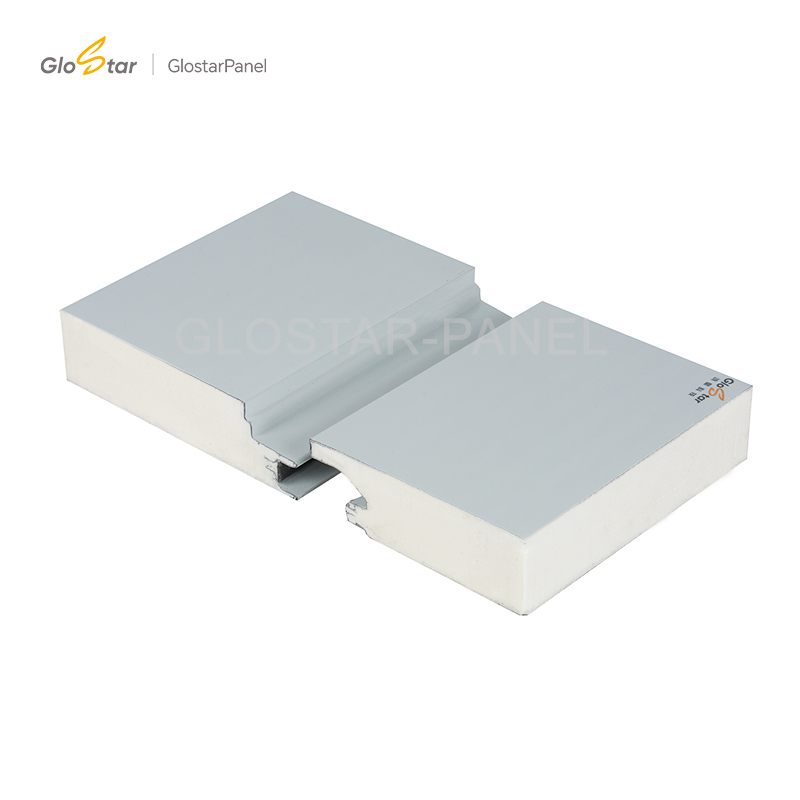
Polyurethane sandwich panels look stable when they arrive on site. The dimensions are correct, the facings are flat, and the core is firmly bonded. Then the panels sit in storage for weeks, sometimes months. When the installation crew finally opens the bundle, they find panels that no longer fit the specifications. The core has shrunk, the edges have pulled back, and the panels are effectively unusable.
Core shrinkage in polyurethane sandwich panels is a real and costly problem. It happens when the foam core experiences conditions that cause it to contract. The shrinkage can be localized or uniform, but the result is always the same: panels that don't fit, joints that can't be sealed properly, and performance that falls short of what was specified.
The root cause is moisture and temperature cycling. Polyurethane foam is hygroscopic to varying degrees. When it absorbs moisture, the foam can swell. When it dries out, it shrinks. The dimensional changes may be small in percentage terms, but on a panel that's several meters long, even a fraction of a percent can add up to several millimeters of dimensional change.
The Science Behind Polyurethane Core Dimensional Stability
The dimensional stability of polyurethane foam depends on its chemical formulation, the manufacturing process, and the conditions it experiences after production. The foam's cell structure, the type of blowing agent used, and the degree of crosslinking all influence how the material responds to environmental changes.
Research has examined the post-stability of rigid polyurethane sandwich panels, including the development of three-dimensional models for evaluating panel shrinkage. Cell microstructure characterization and post-growth angle coefficients provide insight into shrinkage at the microscopic level. The foam's cellular structure can change over time, particularly when exposed to temperature cycling and moisture.
PIR core panels show better dimensional stability than standard PU. The isocyanurate structure is more rigid and less susceptible to the swelling and shrinking that affects standard polyurethane foam. This improved stability is one reason why PIR panels are often preferred in applications where dimensional precision is critical.
Storage Conditions: The Primary Controllable Factor
The single most important factor in preventing polyurethane panel shrinkage is storage conditions. Panels need to be stored in a dry environment with stable temperatures. The ideal storage conditions maintain temperature and humidity within a narrow range.
| Storage Factor | Recommended Condition | Reason |
|---|---|---|
| Temperature | 10°C to 30°C | Prevents thermal cycling stress |
| Humidity | Below 70% RH | Reduces moisture absorption |
| Ventilation | Adequate airflow | Prevents condensation |
| UV Exposure | Protected from direct sunlight | Prevents surface degradation |
| Stacking | Flat, even support | Prevents distortion |
The storage environment should also protect the panels from direct sunlight. UV exposure can degrade the surface facings and accelerate aging of the core material. Panels stored outdoors without protection are at significantly higher risk of dimensional issues.
The ground contact is another consideration. Panels should be stored on raised platforms or pallets to prevent moisture wicking from the ground. The storage area should be well-drained and free from standing water.
Edge Sealing: A Critical but Often Overlooked Step
The edges of polyurethane sandwich panels are the most vulnerable points for moisture ingress. The core is exposed at the edges, and if those exposed sections aren't sealed, moisture can penetrate directly into the foam. Once moisture is inside the core, the dimensional changes begin.
Factory-applied edge seals provide the first line of defense. Many manufacturers apply a protective coating or sealant to the panel edges during production. This sealant prevents moisture from entering the core during storage and transport.
Field cutting creates new exposed edges that need immediate sealing. When panels are cut on site, the fresh cut exposes the core to the environment. If that exposed edge isn't sealed promptly, moisture can enter and cause localized shrinkage. The practice is straightforward: any cut edge should be sealed with an appropriate coating or sealant within hours of cutting.
A Storage Failure Case Study
A modular building project in a coastal region experienced significant panel shrinkage issues. The panels were delivered to site and stored in an open area for approximately six weeks while the foundation work was completed. The storage area was exposed to coastal humidity, morning dew, and occasional rain. The panels were stacked on the ground without protective covers.
By the time installation began, the panel dimensions had changed. The edges had pulled back, and the gaps between panels were larger than the design specifications. The installation team had to adjust the framing and use additional sealant to compensate for the dimensional changes. The project schedule was delayed, and the additional labor added cost to the project.
The investigation identified several contributing factors: storage directly on the ground, no protective covering, exposure to humidity and moisture, and the six-week storage duration. The panel manufacturer had recommended covered storage on raised platforms, but the recommendation wasn't followed on site.
Temperature Management During Storage and Transport
Temperature cycling is another contributor to core shrinkage. Polyurethane foam expands and contracts with temperature changes. When panels experience repeated temperature cycles, the cumulative effect can cause permanent dimensional changes.
The problem is most acute in panels stored in locations with significant day-night temperature swings. Panels stored in uninsulated containers, outdoor storage yards, or partially enclosed spaces are at risk. The thermal cycling stresses the foam core and can lead to shrinkage over time.
Transportation also exposes panels to temperature variations. Panels shipped in containers can experience significant temperature fluctuations during transit. The use of insulated containers or temperature-controlled transport can reduce this risk, though it adds cost.
What to Do When Shrinkage Has Already Occurred
Once polyurethane core shrinkage has occurred, the options are limited. Minor shrinkage can sometimes be accommodated by adjusting the installation details. Additional sealant at the joints, wider gap tolerances, or supplemental insulation can compensate for small dimensional changes.
Significant shrinkage typically means the panels cannot be used as intended. The dimensional changes affect the panel-to-panel joints, the fit with framing members, and the overall envelope performance. In severe cases, the only practical solution is replacement.
Prevention is far more cost-effective than remediation. Proper storage conditions, edge sealing, and handling procedures are relatively low-cost measures that protect a significant investment in panel materials.
Practical Steps for Storage Planning
Planning for panel storage should start before the panels arrive on site. The storage area should be identified and prepared in advance. The area should be level, well-drained, and protected from the elements. Raised platforms or pallets should be available for stacking.
The storage plan should include provisions for edge sealing. If panels will be cut on site, the necessary sealants and application tools should be on hand. The installation team should be trained on the importance of prompt edge sealing.
The storage duration should be minimized. Panels should be scheduled for delivery as close to installation as possible. When extended storage is unavoidable, the storage conditions should be carefully monitored and maintained.
Glostar Panel manufactures polyurethane sandwich panels with attention to dimensional stability and provides guidance on proper storage and handling. The manufacturing process controls the foam formulation and curing conditions to produce panels that resist shrinkage when stored under recommended conditions.
Table of Contents
- The Shrinkage Problem That Shows Up Months Later
- The Science Behind Polyurethane Core Dimensional Stability
- Storage Conditions: The Primary Controllable Factor
- Edge Sealing: A Critical but Often Overlooked Step
- A Storage Failure Case Study
- Temperature Management During Storage and Transport
- What to Do When Shrinkage Has Already Occurred
- Practical Steps for Storage Planning