
 EN
Core material structure sets the baseline for moisture behavior
Gypsum is a porous, hydrous calcium sulfate material bound with paper facers on both sides. Its internal structure contains tiny capillary channels that pull water vapor from surrounding air. Even moisture-resistant gypsum grades can only slow this uptake, not stop it entirely. When relative humidity stays elevated for extended stretches, absorbed moisture weakens the gypsum core and loosens the bond between the gypsum core and paper layer.
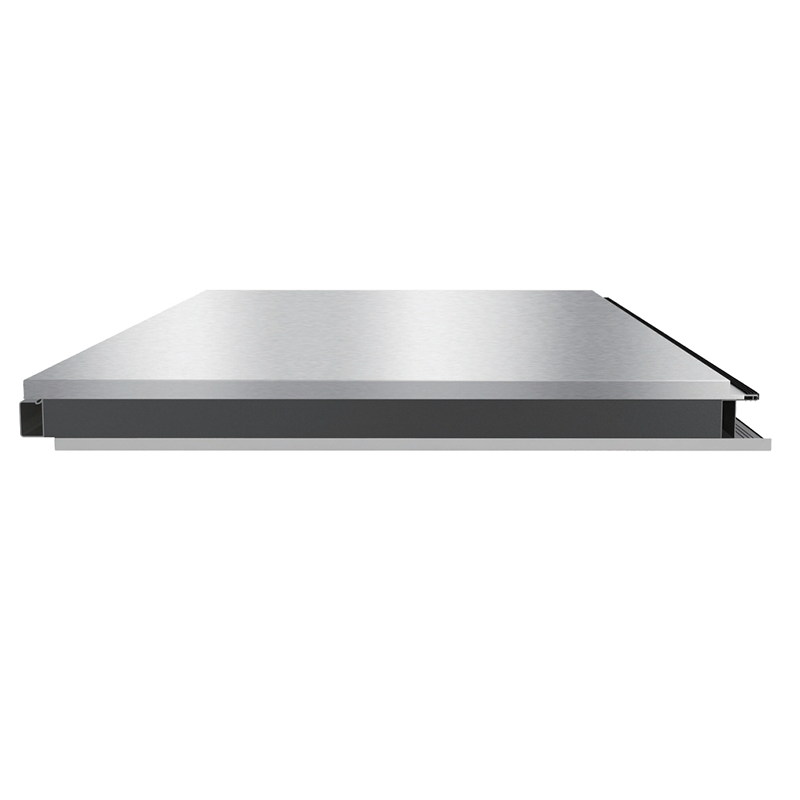
Metal ceiling panels, by contrast, rely on a dense, non-porous metallic substrate paired with continuous factory coating. The base alloy does not contain capillary pores that trap vapor. The coating seals every exposed surface, including cut edges and perforation openings when applied properly. Water vapor cannot penetrate into the bulk material, so no internal softening takes place. This fundamental difference explains why metal ceiling panels hold steady in damp environments where gypsum begins to degrade.
Humidity cycling triggers visible failure modes in gypsum
Many building spaces do not sit at a fixed humidity level. Daily swings from dry operating hours to humid overnight conditions create repeated expansion and contraction cycles. Gypsum absorbs moisture during humid periods and releases it as air dries out. Over multiple cycles, cumulative stress creates permanent deflection, surface bubbling, and delamination. Mold spores can settle on the damp paper surface and colonize quickly, since the trapped moisture provides consistent growth conditions.
Metal ceiling panels do not absorb moisture, so dimensional shifts come almost entirely from thermal expansion rather than vapor uptake. Proper suspension grid tolerances accommodate minor thermal movement. No swelling, no shrinking, and no organic paper layer exist to feed mold growth. This stability matters most in spaces with inconsistent HVAC schedules, where humidity spikes happen without advance warning.
| Performance metric | Standard gypsum panel | Moisture-resistant gypsum | Coated metal ceiling panel |
|---|---|---|---|
| Vapor absorption | High | Moderate | Negligible |
| Permanent deflection under sustained high RH | Likely | Possible | Very low |
| Mold substrate risk | High | Moderate | Minimal |
| Performance after repeated humidity cycles | Degrades gradually | Limited cycle tolerance | Stable |
| Cleaning ease | Difficult once paper swells | Moderate | Straightforward |
Field observations from a humid industrial renovation
A renovation project for a coastal processing facility offered clear side-by-side comparison. The original ceiling used moisture-resistant gypsum boards. After several years of regular high humidity and occasional condensation events, sections showed sagging seams, dark mold patches along joint lines, and crumbling edges. The renovation team replaced those sections with coated metal ceiling panels and kept the same ventilation and humidity control setup.
Follow-up checks over multiple seasonal cycles showed no measurable sagging or discoloration on the metal panels. The old gypsum sections left in adjacent storage zones continued to worsen. This observation lines up with testing referenced in ASTM C473, which defines standard humidified deflection testing protocols for gypsum panel products and documents how moisture exposure changes mechanical performance over time.
Coating quality defines the upper limit of metal humidity performance
Metal is not automatically immune to every moisture-related risk. The protective finish acts as the primary barrier. Poor coating coverage, thin coating layers, or damage during handling can expose bare metal to humid, salty, or chemically active air. Once the substrate is exposed, corrosion can start and spread beneath the finish.
Common reliable options include powder coating and PVDF finishes, which pass extended humidity and salt spray testing when applied at specified thickness. Edge coverage deserves extra attention. Panels cut or perforated after coating leave raw metal exposed unless a secondary sealing step is added. A well-specified metal ceiling system treats every edge and hole as a critical sealing point.
Realistic limits for both material families
Metal ceiling panels are not a universal fix for every moisture scenario. Direct, continuous liquid pooling will eventually overwhelm even good coatings if drainage is missing. Heavy corrosive fumes still require upgraded alloy grades and specialized coating systems. Gypsum still makes practical sense in dry, stable indoor spaces, where cost and finishing flexibility create strong advantages.
Moisture-resistant gypsum remains a valid pick for areas with brief, mild damp exposure, but it carries a shorter service window and stricter maintenance expectations. The decision boils down to matching material permeability to the actual vapor load of the space. Spaces with cyclic humidity, coastal salt exposure, or limited maintenance access tilt the balance toward metal ceiling panels.
Glostarpanel maintains tight control over substrate selection and coating application workflows for ceiling products. Manufacturing controls focus on consistent coverage and edge sealing, supporting steady performance across variable ambient moisture conditions. The supply setup supports consistent lead times for standard configurations without tying output to narrow custom runs.