
 EN
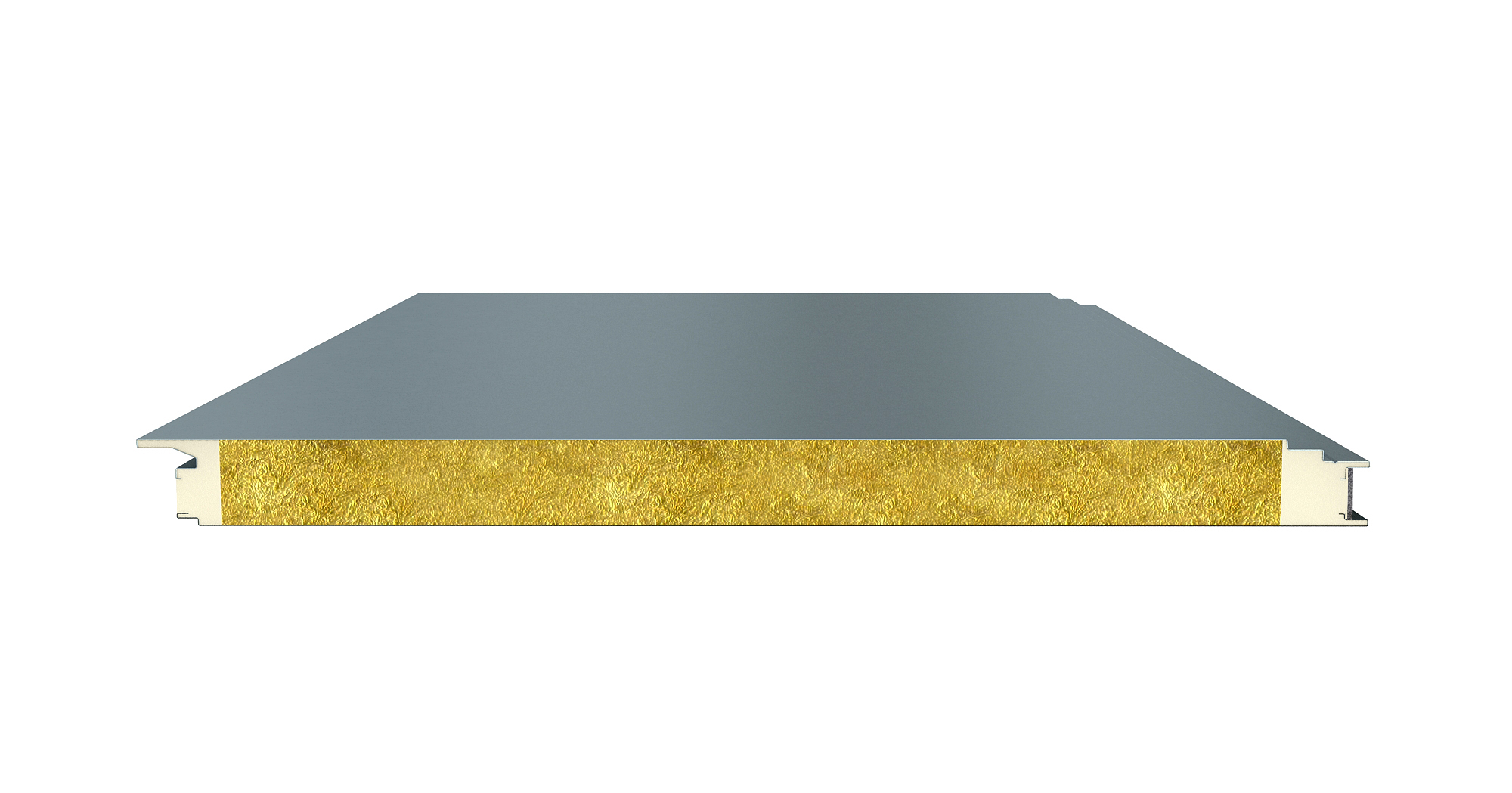
Continuous rating differs sharply from short‑term peak temperature
Many specification sheets list two separate temperature values for a PIR sandwich panel, and mixing these two figures creates costly misjudgments on site. The continuous service temperature describes the highest temperature the foam core can sustain indefinitely without gradual performance drift. Most standard PIR formulations hold stable around 120°C for steady exposure, though custom foam chemistries can shift this boundary slightly higher. Peak temperature covers brief spikes that last minutes or a handful of hours, such as solar heat buildup on dark roof skins or temporary process heat leakage.
These short spikes can reach 150°C or above without immediate failure, but repeated cycling near that threshold accelerates aging. The isocyanurate ring structure that gives PIR its thermal stability starts slow chemical breakdown once held above the continuous rating. Thermal conductivity creeps upward, and internal bonding between foam and metal facers weakens over time. This distinction is the first check engineers should run before locking in panel selection.
How core chemistry sets thermal stability limits
PIR foam forms through trimerization of isocyanate monomers, building a rigid heterocyclic backbone that resists heat better than standard PUR foam. Polyurethane relies on urethane linkages that break down at comparatively lower temperatures, while the isocyanurate rings need much higher heat to trigger molecular breakdown. Even so, the polymer matrix still contains softer polyol segments and auxiliary additives that become vulnerable before full pyrolysis begins.
When temperature climbs past the stable operating band, three changes unfold gradually.
- Closed cell structure begins to shrink, raising thermal conductivity.
- Adhesion between foam core and metal facer loses grip, creating delamination gaps.
- Volatile components inside the foam release slowly, leaving permanent voids.
Lab testing under ASTM C1763 tracks dimensional stability of rigid cellular plastics at elevated temperatures, capturing these subtle shifts before visible damage appears. The standard’s aging protocols show that long‑term exposure just above the published continuous rating cuts the usable service window noticeably.
| Material | Continuous service temperature | Tolerable short peak temperature | Main risk above continuous rating |
|---|---|---|---|
| Standard PIR sandwich panel | 120°C | 150°C | Slow foam shrinkage and bond loss |
| Standard PUR sandwich panel | 80°C | 110°C | Fast thermal degradation |
| Mineral wool sandwich panel | 250°C+ | 400°C | No organic degradation risk |
| EPS insulated panel | 70°C | 85°C | Melting and rapid shrinkage |
Lessons from a retrofitted drying facility project
A drying building renovation highlighted how easy it is to misread temperature ratings. The design team initially selected standard PIR sandwich panels after only reviewing the peak temperature figure from a datasheet. The space ran moderate background heat for extended shifts, keeping the panel inner surface close to 130°C for most operating days. Within a moderate span of time, inspectors found hollow spots across wall sections where foam had pulled away from metal skins. Thermal imaging confirmed uneven heat transfer through those delaminated zones.
The correction did not require switching to mineral wool. The team reworked internal shielding to drop steady surface temperatures below 120°C, and remaining panels stabilized afterward. The incident reinforces that datasheet peak numbers are not meant for round‑the‑clock exposure.
Facer and adhesive choices alter real‑world thermal tolerance
The foam core usually draws all the attention, yet the metal skin and bonding layer often fail before the foam itself. Most PIR sandwich panels use continuous lamination adhesives formulated to match the core’s thermal range. If facers absorb solar radiation and run hotter than the foam rating, heat conducts inward and loads the foam beyond its design point. Dark coated steel facers on roof assemblies can run far hotter than ambient air on bright summer days.
Thin facers transfer heat faster than thicker substrates. Surface coatings also influence temperature buildup. Light reflective finishes reduce solar gain, keeping the whole panel assembly cooler under identical sunlight. A panel rated for 120°C core temperature can still run into trouble if the facer routinely absorbs enough radiation to push the foam past that limit.
Practical boundaries for high‑temperature layouts
PIR sandwich panels work well for many heated spaces, but they are not suited for environments with sustained temperatures above their continuous rating. Constant exposure above 120°C will shorten consistent insulation performance, even if no obvious melting or smoke appears. Direct contact with radiant heat sources, uninsulated steam piping, or hot process surfaces requires separation barriers or alternate insulation systems.
It also helps to separate air temperature from surface temperature readings. Air sensors often understate the actual temperature touching the panel face. Radiant heat can drive the skin temperature significantly higher than surrounding air, creating hidden overload conditions. Any layout with intermittent heat sources should include thermal logging across the hottest panel surfaces, not just general room sensors.
Glostarpanel maintains tight formulation control for the PIR foam core and lamination bonding process, delivering consistent thermal performance across standard panel configurations. Production controls align with widely accepted testing frameworks for rigid foam insulation, supporting predictable behavior under defined thermal conditions. The supply structure supports steady order fulfillment without forcing narrow custom formulations for most routine builds.