
 EN
EN
The Logistics Nightmare of Building Anything Remote
Getting materials to a remote mining site is expensive. Getting skilled labor there is even more expensive. Getting both to show up at the same time, in the right sequence, with the right tools, and then keeping them housed and fed for months or years—that’s where traditional construction methods fall apart. Prefabricated houses didn't become popular in the mining and construction camp sector because they look nice. They became popular because they solve a logistics problem that conventional building can't touch.
Years Versus Months: The Schedule Gap That Changes Everything
A traditional brick-and-mortar camp for a remote mining operation typically takes two to three years from groundbreaking to move-in. That timeline assumes everything goes right—material deliveries on schedule, labor availability, decent weather, no supply chain disruptions. In remote locations, those assumptions are optimistic at best.
Prefabricated modular camps can be fully operational within three to six months from contract signing. One documented case involved a 120-day delivery from contract signing to operational handover for a camp in the Democratic Republic of Congo. The client had previously evaluated traditional on-site construction quotes ranging from 14 to 18 months. That’s the difference between starting production in a year versus starting production in four months.
| Factor | Traditional Site-Built Camp | Prefabricated Modular Camp |
|---|---|---|
| Typical project timeline | 2–3 years | 3–6 months |
| Construction vs. site prep | Sequential | Parallel (factory + site) |
| Labor requirements | Large onsite workforce | Smaller onsite crew |
| Weather delays | Significant | Minimal (factory production) |
| Supply chain risk | High (remote deliveries) | Moderate (consolidated shipping) |
The Parallel Processing Advantage That Nobody Mentions
Here’s the mechanical advantage that prefabrication delivers: while the factory is building bedrooms, dining halls, and recreation facilities, the site crew is clearing land, pouring foundations, and running utilities. Both streams of work happen simultaneously. Traditional construction can't do that because the building has to go up before anything else happens.
A modular camp for 2,000 workers installed at a gold mining site in Liberia demonstrates the scale this approach can achieve. The factory produced modules while the site team prepared the ground. When the modules arrived, installation took weeks rather than months. The mine started operations on schedule instead of waiting two years for worker housing.
Why Shipping Empty Containers Is Actually the Smart Part
One of the less obvious advantages of prefabricated camp housing is shipping efficiency. Fourteen modular units can typically fit into a single shipping container. That density matters enormously when every kilometer of transport adds cost and every port delay stretches the schedule.
Compare that to traditional construction, where shipping lumber, drywall, plumbing fixtures, windows, doors, and roofing materials separately means dozens of shipments, each with its own logistics coordination, customs clearance, and last-mile delivery challenges. Prefabrication consolidates the supply chain into fewer, more predictable shipments.
The math is straightforward: fewer shipments mean lower freight costs, less customs paperwork, and fewer opportunities for things to go wrong. For projects in places like the Andes or the Australian outback, where the nearest port might be days away by road, that consolidation isn't a convenience—it's a necessity.
Quality Control When Quality Control Is Hard to Do On Site
Building a worker camp in a remote location means dealing with local labor that may or may not have the right skills, materials that may or may not meet specifications, and weather that definitely won't cooperate. Factory production eliminates most of those variables.
Modular units are built on assembly lines, with jigs, templates, and quality checks at every stage. Electrical systems get tested before the walls are closed up. Plumbing gets pressure-tested in the factory. Insulation gets installed correctly because the work happens indoors, not in the wind and dust of a remote jobsite.
One project manager working on a camp in the Mongolian Gobi put it this way: “On a traditional site, I'd have to train local welders, inspect every joint, and hope the concrete pour doesn't freeze overnight. In the factory, I know exactly what I'm getting because I can see it before it leaves.”
The Flexibility That Matters When Mine Plans Change
Mining operations aren't static. Ore bodies get re-evaluated. Production targets shift. Workforce sizes fluctuate. A camp that's designed for 500 workers might need to expand to 800, or contract to 300, within a single project lifecycle.
Modular camps offer genuine flexibility here. Units can be added, removed, or reconfigured as needs change. Traditional site-built camps don't offer that option—you build what you build, and if you need more, you start over.
This adaptability matters for another reason: camps can be relocated. When a mine plays out or a construction project finishes, modular units can be dismantled, shipped to the next site, and reassembled. That's not just convenient—it preserves capital investment that would otherwise be written off.
What Prefabrication Doesn't Solve (And Why That Honesty Matters)
Prefabricated camps aren't a magic bullet. The upfront engineering and tooling costs are higher. The lead time for custom designs can stretch if the client wants non-standard layouts. And the logistics of getting finished modules to site—especially if the site lacks road access or a port—can still be challenging.
There's also the question of local labor. Prefabrication reduces the need for skilled onsite workers, which is an advantage in remote areas, but it doesn't eliminate it entirely. Foundations still need to be poured. Modules still need to be craned into position and connected. Utilities still need to be tied in.
The Real Reason Prefabs Dominate the Camp Market
Walk into any prefabricated camp and the experience isn't fundamentally different from a site-built one. The walls are similar thickness. The rooms are similar sizes. The plumbing works the same way. The difference isn't in the finished product—it's in how that product got there.
Prefabricated houses dominate remote mining and construction camps because they deliver a predictable, high-quality result in a fraction of the time, with a fraction of the onsite labor, and with dramatically less exposure to the risks that plague traditional construction in remote locations. A 2022 study found that offsite prefabrication methods can reduce project duration by roughly 18 percent, costs by nearly 25 percent, and carbon emissions by over 31 percent compared to conventional onsite approaches.
For companies operating in the mining and infrastructure sectors, where time is literally money and every day of delay costs six or seven figures, those numbers aren't academic. They're the difference between a profitable project and a money-losing one.
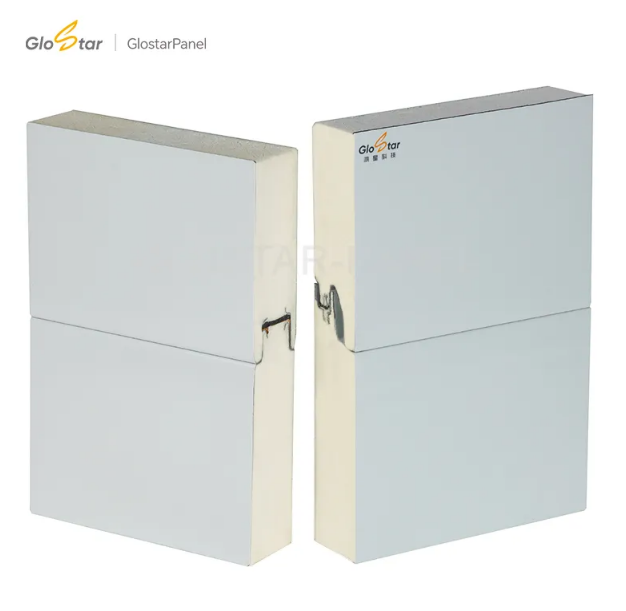
For camp projects where panel-based enclosure systems are part of the specification, manufacturers like Glostar have developed production capabilities that support the fast-track delivery schedules these remote projects demand, with an emphasis on consistent fit and finish across large unit volumes.
Table of Contents
- The Logistics Nightmare of Building Anything Remote
- Years Versus Months: The Schedule Gap That Changes Everything
- The Parallel Processing Advantage That Nobody Mentions
- Why Shipping Empty Containers Is Actually the Smart Part
- Quality Control When Quality Control Is Hard to Do On Site
- The Flexibility That Matters When Mine Plans Change
- What Prefabrication Doesn't Solve (And Why That Honesty Matters)
- The Real Reason Prefabs Dominate the Camp Market