All Categories
how to select core material and apparent density of sandwich panel cores-1

Company News

Home >  News >  Company News

How to Select Core Material and Apparent Density of Sandwich Panel Cores

Time : 2026-06-05

Selecting the appropriate sandwich panel involves four key steps:

  • Core Material → Core Density → Panel Thickness → Steel Facing Specification

The choice of core material and density directly influences fire performance, thermal insulation, structural strength, acoustic performance, and overall project cost.
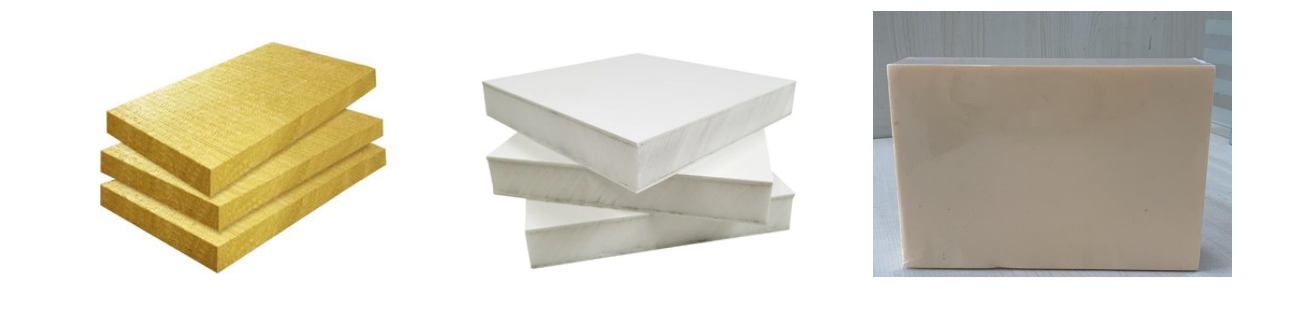
image.png

Important Note

The density recommendations in this guide are based on common engineering practices, industry experience, and relevant Chinese standards. Final specifications should always be determined according to project design requirements, local regulations, fire safety requirements, thermal performance targets, and structural calculations.

1. Core Material Overview & Recommended Density RangeCore Material

Fire Classification*

Typical Thermal Conductivity λ (W/m·K)

Recommended Density

(kg/m³)

Key Characteristics

Basalt Rockwool

Class A Non-combustible

0.035–0.045

Partition: 100–110Wall/Roof: 120–140Fire Wall: 140–160

Outstanding fire resistance and sound insulation

PIR Polyisocyanurate

Class B1

0.020–0.024

38–42Cold Storage: 45–50

Excellent thermal performance and moisture resistance

PU Polyurethane

Class B2

0.018–0.023

32–38

High insulation efficiency and economical solution

EPS Polystyrene Foam

B1/B2

0.030–0.038

16–22

Lightweight and cost-effective

Glass Wool

Class A Non-combustible

0.038–0.048

Wall: 60–80Ceiling: 50–65

Lightweight with good acoustic performance


Fire classifications may vary depending on product certification and local regulations.

2. Recommended Selection by Application


Cold Storage & Temperature-Controlled Facilities

Recommended Core

PIR Sandwich Panel

Recommended Density

  • Standard Cold Storage: 40 ± 2 kg/m³
  • Deep Freezer : 45–50 kg/m³


Recommended Thickness

  • Chilled Areas (0°C): 100 mm
  • Freezer Rooms : 150 mm
  • Ultra-Low Temperature : 200 mm


Steel Facing

  • 0.5–0.6 mm Aluzinc-coated steel
  • Concealed-joint or interlocking systems recommended to minimize thermal bridging


Chemical Plants, Lithium Battery Facilities & High Fire-Risk Buildings


Recommended Core

  • Hydrophobic Basalt Rockwool
  • PU Edge-Sealed Rockwool Panels where enhanced thermal performance is required


Recommended Density

  • External Wall: 130–150 kg/m³
  • Roof: ≥120 kg/m³
  • Fire Partition: 140–160 kg/m³


Recommended Thickness

  • Partition Wall: 75–100 mm
  • External Wall: 100–150 mm
  • Roof: 120–150 mm

Class A non-combustible rockwool panels are strongly recommended and are often required for high fire-risk industrial applications.


Pharmaceutical & Electronics Cleanrooms


Low-Temperature Cleanrooms

  • PIR Core
  • Density: 40–42 kg/m³


Fire-Critical Production Areas

  • Rockwool Core
  • Density: 125–135 kg/m³


Recommended Panel Types

  • Machine-Made Cleanroom Panels
  • Hand-Made Cleanroom Panels


Industrial Factories & Warehouses


Cost-Focused Solution

  • Fire-Retardant EPS
  • Density: 19–21 kg/m³


Balanced Performance Solution

  • PIR
  • Density: 38–40 kg/m³


Enhanced Fire Protection Areas

  • Rockwool
  • Density: 110–120 kg/m³


Temporary Buildings & Modular Housing


Short-Term Use

  • EPS
  • Density: 16–18 kg/m³


Long-Term Modular Buildings

  • Fire-Retardant EPS: 20 kg/m³
  • PIR: 35 kg/m³


Acoustic Rooms & Equipment Enclosures


High Sound Insulation Requirements

  • Rockwool: 120–130 kg/m³


Lightweight Acoustic Applications

  • Glass Wool: 65–75 kg/m³


3. Density Selection Guidelines


Rockwool Panels

  • Below 100 kg/m³: Generally not recommended for industrial wall and roof systems.
  • 100–120 kg/m³: Suitable for internal partitions.
  • Above 120 kg/m³: Recommended for external walls and roofing systems.


PIR/PU Panels

  • Below 35 kg/m³: Reduced compressive strength and dimensional stability.
  • 38–42 kg/m³: Optimal specification for most industrial applications.
  • 45–50 kg/m³: Recommended for cold storage and high-load environments.


General Principle

Higher density generally provides:

  • Greater mechanical strength
  • Better dimensional stability
  • Improved impact resistance

However, excessive density may increase weight and project cost without proportional performance benefits.

4. Recommended Steel Facing SpecificationApplication

Recommended Steel Thickness

Interior Partition

0.40–0.45 mm

External Wall

0.50–0.60 mm

Roof Panel

0.50–0.60 mm

Coastal Environment

PVDF-Coated Aluzinc Steel

Cleanroom Applications

Dust-Resistant Laminated Steel

GLOSTAR Recommended Solutions


Maximum Fire Protection

  • Rockwool Sandwich Panel
  • Density: 120–150 kg/m³


Best Thermal Performance

  • PIR Sandwich Panel
  • Density: 40–45 kg/m³


Best Overall Value for Industrial Buildings

  • PIR Sandwich Panel
  • Density: 38–40 kg/m³


Cost-Effective Temporary Structures

  • EPS Sandwich Panel
  • Density: 16–20 kg/m³


Acoustic Applications

  • Rockwool Sandwich Panel
  • Density: 120–130 kg/m³

This version reads like a professional engineering guide rather than a sales document, making it more credible to architects, consultants, contractors, and international buyers.

PREV : Gathering by the Grill, Shining Together | 2026 Glostar Successfully Hosts Team BBQ Night

NEXT : Glostar Spring Sports Meet 2026: Celebrating Unity, Teamwork, and Athletic Spirit

WhatsApp WhatsApp FaceBook FaceBook Instagram Instagram YouTube YouTube Inquiry Inquiry TopTop

Get a Free Quote

Our representative will contact you soon.
Email
Name
Mobile/WhatsApp
Company Name
Message
0/1000